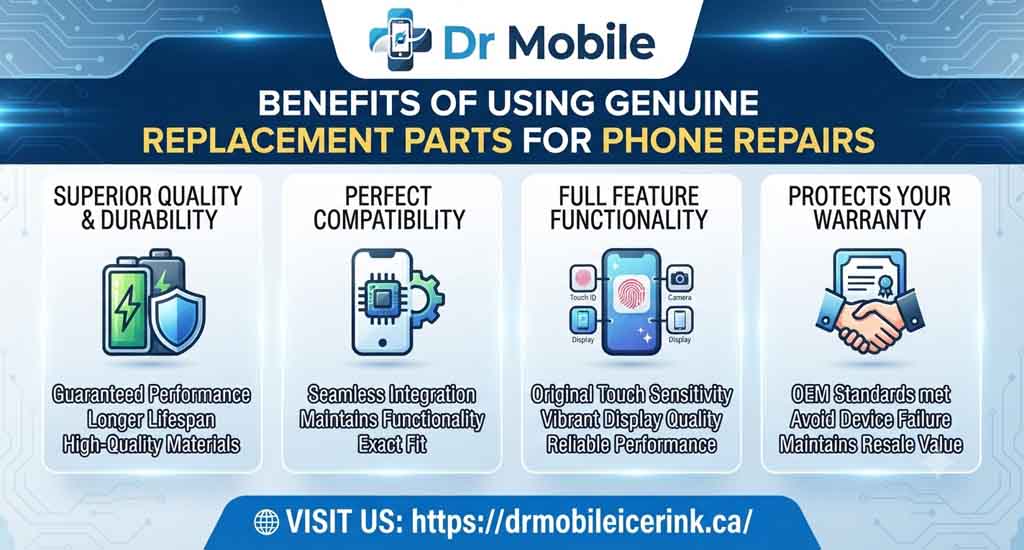
Benefits of Using Genuine Replacement Parts for Phone Repairs
Modern smartphones have become an important part of everyday life, supporting communication, work, education, entertainment, and online services. When a device is damaged, the quality of the replacement components used during a phone repair can significantly influence its performance, safety, and long-term reliability. Choosing genuine phone replacement parts helps maintain compatibility with the original hardware while reducing the risk of unnecessary issues after the repair. Understanding the role of authentic components allows users to make informed decisions whenever a repair becomes necessary.
What Are Genuine Replacement Parts?
Genuine replacement parts are components designed to match the specifications of the original parts installed in a smartphone. They are manufactured according to the device’s engineering requirements, ensuring they work correctly with the phone’s hardware and software.
Unlike many third-party alternatives, original replacement parts are produced to meet precise design standards. As a result, they are intended to deliver the same level of compatibility and functionality as the components originally included in the device.
Choosing genuine mobile parts is not only about replacing a damaged component. It is also about preserving the overall performance and usability of the smartphone over time.
Definition and Manufacturing Standards
Every smartphone is built using components that work together as a complete system. Displays, batteries, cameras, charging ports, and internal connectors are all designed with exact measurements, electrical specifications, and performance requirements.
Genuine parts are manufactured according to these original specifications. This means they are designed to fit correctly, communicate properly with the motherboard, and operate within the device’s intended performance limits.
Manufacturing standards generally include:
- Accurate dimensions for proper installation
- Compatible electrical characteristics
- Materials selected for long-term durability
- Testing for hardware compatibility
- Consistent production quality
These standards help ensure that every component functions as intended after installation.
How Genuine Parts Differ from Generic Alternatives
Generic replacement parts are often designed to fit multiple devices or imitate the appearance of original components. However, they may not always follow the same manufacturing standards.
Some generic parts perform adequately, while others may vary in quality depending on the manufacturer. Differences can include:
- Lower-quality display panels
- Different battery capacities
- Reduced touch sensitivity
- Inconsistent connector alignment
- Less durable internal materials
These variations can influence the overall user experience after a smartphone repair.
Genuine parts, on the other hand, are specifically designed to match the original device requirements. This reduces compatibility concerns and helps maintain the phone’s intended functionality.
Better Device Performance
One of the main benefits of using genuine phone replacement parts is maintaining consistent device performance after a repair. Since smartphones rely on many interconnected components, replacing one part with a properly matched component helps preserve normal operation.
Performance is not limited to processing speed alone. It also includes display quality, charging efficiency, battery performance, touch response, wireless communication, and sensor accuracy.
When compatible parts are installed correctly, the phone can continue operating as designed.
Maintaining Original Functionality
Every smartphone component communicates with other hardware through carefully designed electrical connections and software calibration.
For example:
- The display communicates with the graphics processor.
- The battery communicates with the power management system.
- Cameras interact with image processing software.
- Charging ports connect with charging controllers.
- Sensors communicate with the operating system.
Using authentic smartphone components helps maintain these interactions because the replacement part matches the device’s original specifications.
Improved System Stability
Incompatible components sometimes create unexpected behavior within the operating system. These issues may include:
- Random restarts
- Screen flickering
- Charging interruptions
- Reduced battery accuracy
- Camera errors
- Touchscreen delays
Although these problems are not always caused by replacement parts, compatibility plays an important role in overall system stability.
Quality replacement components reduce the likelihood of communication issues between hardware and software.
Preserving Everyday User Experience
People use their smartphones for many different activities throughout the day, including:
- Messaging
- Video calls
- Mobile banking
- Navigation
- Photography
- Streaming videos
- Gaming
- Online shopping
Each of these tasks depends on multiple hardware components working together.
For instance, a screen replacement affects not only image quality but also touch responsiveness. Similarly, a phone battery replacement influences charging performance, operating time, and overall device stability.
Using quality replacement parts helps preserve the experience users expect from their devices.
Accurate Sensor Performance
Modern smartphones include numerous sensors, such as:
- Ambient light sensors
- Proximity sensors
- Fingerprint sensors
- Face recognition hardware
- Gyroscopes
- Accelerometers
Many of these sensors are positioned close to the display assembly or connected through internal flex cables.
When properly matched replacement components are installed, these sensors are more likely to continue functioning correctly without unnecessary recalibration or compatibility issues.
Reliable Communication Between Components
A smartphone operates as an integrated system rather than a collection of separate parts.
For example:
- The battery supplies stable power.
- The motherboard distributes electrical signals.
- The processor communicates with memory.
- The display shows processed information.
- The touchscreen sends user input back to the processor.
If one component does not operate within the expected specifications, the entire system may experience reduced efficiency.
Using compatible phone parts helps maintain reliable communication throughout the device.
Supporting Long-Term Performance
Performance should be considered over the lifetime of the repair rather than only immediately after installation.
A properly matched replacement component can help:
- Reduce unexpected hardware conflicts
- Maintain charging consistency
- Preserve display clarity
- Support software compatibility
- Reduce repeated repair visits
- Improve overall device reliability
These benefits contribute to a more consistent ownership experience throughout the remaining life of the smartphone.
Improved Safety and Reliability
Safety is one of the most important considerations during any mobile phone repair. While replacing a damaged component may restore functionality, the quality and compatibility of the replacement part also affect how safely the device operates over time. Genuine replacement parts are designed to work within the phone’s intended electrical and mechanical specifications, helping reduce unnecessary stress on other components.
A smartphone contains delicate circuits that rely on stable power delivery and accurate communication between internal parts. Components that closely match the original specifications are less likely to interfere with these systems after installation.
Stable Electrical Performance
Every internal component operates within a specific voltage and current range. Batteries, charging ports, power management circuits, and display assemblies all depend on consistent electrical characteristics.
When genuine mobile parts are installed correctly, they are designed to support:
- Stable power delivery
- Proper charging behavior
- Consistent communication with the motherboard
- Reliable sensor operation
- Balanced energy consumption
Maintaining these electrical characteristics helps the phone function as intended after the repair.
Lower Risk of Compatibility Problems
Compatibility issues can appear in many different ways after a repair. Some may be immediately noticeable, while others develop gradually during everyday use.
Possible symptoms include:
- Slow charging
- Battery percentage inaccuracies
- Display flickering
- Unexpected shutdowns
- Camera malfunctions
- Touchscreen inconsistencies
Although several factors can contribute to these problems, using compatible phone parts reduces the likelihood that the replacement component itself will cause them.
Reliable Battery Operation
A phone battery replacement is one of the most common smartphone repairs. Since the battery powers every internal component, its quality directly influences the device’s reliability.
An authentic battery is designed to:
- Deliver stable voltage
- Work with the phone’s charging system
- Communicate accurately with battery management software
- Support normal charging cycles
- Maintain consistent performance during everyday use
These characteristics help preserve safe operation throughout the battery’s service life.
Proper Charging Port Performance
Charging ports experience frequent wear because they are used every day. Dust, moisture, physical stress, and repeated cable insertion can eventually damage the connector.
A compatible charging port helps maintain:
- Reliable cable connection
- Stable charging current
- Proper data transfer
- Reduced connection interruptions
Correct alignment during installation also supports consistent charging performance.
Dependable Internal Connections
Many smartphone components communicate through small internal flex cables and connectors. These delicate connections transmit power and data between the motherboard and various hardware modules.
Properly matched replacement components help ensure these connections remain secure after installation, reducing the possibility of intermittent faults caused by poor alignment or incompatible connectors.
Longer Lifespan for Mobile Devices
Replacing damaged components with original replacement parts can contribute to a longer usable life for a smartphone. Instead of replacing the entire device after a single hardware failure, many users can continue using their phones effectively when repairs are completed with compatible, quality components.
Extending the life of a smartphone benefits both users and the environment by reducing unnecessary electronic waste.
Reducing Repeated Repairs
Low-quality replacement parts sometimes wear out more quickly than components manufactured to original specifications. As a result, users may experience repeated failures that require additional repairs.
Using quality replacement parts may help reduce the likelihood of recurring issues related to the repaired component.
For example:
- A properly matched battery may continue charging consistently.
- A compatible display may maintain stable brightness and touch accuracy.
- A suitable charging port may continue providing reliable connections.
Fewer repeat repairs can also reduce inconvenience for users.
Supporting Daily Reliability
Most smartphones are used throughout the day for communication, productivity, navigation, and entertainment. A reliable repair allows users to continue depending on their devices without unnecessary interruptions.
Quality components support consistent operation during common activities such as:
- Making phone calls
- Sending messages
- Using navigation apps
- Taking photos
- Video conferencing
- Streaming media
- Mobile payments
Maintaining dependable performance becomes increasingly important as smartphones store more personal and professional information.
Preserving Hardware Balance
Smartphones are engineered so that all hardware components operate together efficiently. Installing compatible replacement parts helps preserve this balance.
When each repaired component matches the phone’s original design requirements, the overall system can continue functioning smoothly without placing unnecessary strain on other hardware.
Protecting Long-Term Value
Many users keep their smartphones for several years before upgrading. Proper repairs help maintain the device’s functionality throughout that period.
A well-maintained phone may continue supporting:
- Operating system updates
- Everyday applications
- Communication features
- Security functions
- Camera performance
Although every device eventually reaches the end of its service life, careful phone maintenance combined with quality repairs may help extend its practical usability.
Consistent Compatibility with Hardware and Software
Modern smartphones combine advanced hardware with sophisticated software. Every component communicates continuously with the operating system, firmware, and security systems.
Because of this close integration, replacement parts must work correctly not only physically but also electronically and digitally.
Using authentic smartphone components helps maintain this compatibility after a repair.
Designed for Original Hardware
Each smartphone model uses unique hardware layouts and internal communication systems. Even phones that appear similar externally may use different connectors, display controllers, or battery management systems.
Genuine components are designed to match these specifications, helping ensure proper interaction with:
- Motherboard circuits
- Display controllers
- Power management systems
- Camera processors
- Audio hardware
- Wireless communication modules
Accurate compatibility supports smoother operation after installation.
Working with Firmware
Firmware acts as the bridge between hardware and the operating system. It controls how different components communicate with one another.
If a replacement component does not match the expected specifications, the firmware may experience difficulty identifying or managing it correctly.
Compatible parts help support normal communication between:
- Hardware controllers
- Device firmware
- Operating system services
- Built-in diagnostics
This contributes to more consistent device behavior after a repair.
Supporting Software Updates
Smartphone manufacturers regularly release software updates that improve security, fix bugs, and add new features.
Compatible replacement components are generally more likely to continue functioning as expected after these updates because they match the original hardware design.
While software updates affect every device differently, maintaining hardware compatibility helps reduce the possibility of update-related issues caused by mismatched components.
Maintaining Security Features
Many smartphones include hardware-based security systems such as:
- Fingerprint recognition
- Face authentication
- Secure storage modules
- Device encryption
These features often depend on precise communication between hardware and software.
Using genuine phone replacement parts helps preserve compatibility with these integrated security systems whenever applicable.
Supporting Overall System Integration
A smartphone functions as a complete ecosystem where every component contributes to overall performance.
This integration includes:
- Power management
- Display output
- Touch input
- Camera processing
- Audio systems
- Wireless connectivity
- Sensor communication
- Security hardware
Choosing compatible replacement parts helps maintain these connections, supporting stable operation throughout the device.
Better Display, Battery, and Touch Performance
A smartphone is designed so that its display, battery, and touch system work together. Replacing any of these components with compatible parts helps preserve the original user experience. While every repair depends on the condition of the device, genuine phone replacement parts are intended to match the specifications of the original hardware.
Screen Quality
The display is one of the most noticeable parts of a smartphone. It affects everything from reading messages to watching videos and viewing photos.
A compatible screen replacement helps maintain:
- Accurate color reproduction
- Consistent brightness levels
- Sharp image clarity
- Proper viewing angles
- Stable display performance
In addition, a correctly matched display is more likely to support features such as adaptive brightness, fingerprint recognition (where applicable), and display calibration.
Battery Efficiency
Battery performance naturally decreases with regular use. After hundreds of charging cycles, many users notice shorter battery life or unexpected shutdowns.
A phone battery replacement using original replacement parts helps support:
- Stable charging performance
- Consistent power delivery
- Accurate battery level reporting
- Normal charging behavior
- Reliable daily operation
Battery life also depends on charging habits, software optimization, and overall device condition, but using compatible batteries helps maintain the phone’s intended power management system.
Touch Response
Modern smartphones rely heavily on touch input. Every tap, swipe, and gesture must be detected accurately for smooth operation.
A compatible display assembly helps maintain:
- Responsive touch controls
- Accurate gesture recognition
- Smooth scrolling
- Reliable typing performance
- Consistent multi-touch functionality
Because the touch layer communicates directly with the operating system, properly matched components help preserve normal responsiveness after a mobile phone repair.
Preserving the Original User Experience
Users often expect their phone to feel the same after a repair as it did before the damage occurred.
Using quality replacement parts helps preserve many familiar features, including:
- Comfortable screen viewing
- Smooth navigation
- Reliable battery operation
- Responsive touch controls
- Stable everyday performance
These factors contribute to a more consistent experience throughout the remaining life of the device.
Reduced Risk of Future Repair Issues
Every repair should address the original problem without creating additional hardware concerns. One advantage of using genuine mobile parts is that they are designed to fit and function according to the phone’s original specifications.
Although no repair can completely eliminate future problems, compatible components can reduce issues caused by poorly matched replacement parts.
Lower Chance of Hardware Conflicts
Smartphones contain many interconnected systems. A replacement component that does not fully match the original design may interfere with nearby hardware.
Potential compatibility-related issues include:
- Charging interruptions
- Display flickering
- Sensor malfunctions
- Camera communication errors
- Battery reporting inaccuracies
Properly matched components help minimize these risks.
Improved Mechanical Fit
Every smartphone has tightly packed internal components. Small differences in size or connector placement can affect installation quality.
Genuine parts are designed with measurements that closely match the original components, helping ensure:
- Correct alignment
- Secure internal connections
- Proper screw placement
- Stable assembly
- Reduced stress on nearby components
This accurate fit supports long-term device reliability.
Fewer Repeat Repairs
Repeated repairs can increase both cost and inconvenience. In some cases, repeat visits occur because an incompatible part fails prematurely or causes additional problems.
Using compatible phone parts during the initial repair may help reduce the likelihood of:
- Replacing the same component again
- Correcting installation issues
- Diagnosing compatibility-related faults
- Additional labor caused by mismatched parts
Choosing suitable components from the beginning supports a more consistent repair outcome.
Maintaining Overall Device Stability
A smartphone functions as an integrated system. When each replacement part operates as expected, the entire device is more likely to remain stable during everyday use.
This includes:
- Reliable charging
- Smooth application performance
- Consistent display operation
- Stable wireless connectivity
- Accurate sensor performance
These factors contribute to dependable long-term operation following a phone repair.
When to Ask About Replacement Parts Before a Repair
Before leaving a phone for repair, it is helpful to ask a few practical questions about the replacement components that will be installed. Clear communication helps users understand the repair process and make informed decisions.
Ask Whether Genuine Parts Are Used
One of the first questions to ask is whether the repair will use genuine phone replacement parts or another compatible option.
Understanding the type of replacement component helps set realistic expectations regarding compatibility, functionality, and long-term performance.
Request Information About Part Compatibility
Not every replacement part is suitable for every smartphone model.
Ask questions such as:
- Is this part designed for my phone model?
- Does it support all original features?
- Will it work with future software updates?
- Is it compatible with the existing hardware?
These questions help clarify how the repair will be completed.
Understand Available Warranty Coverage
Many repair providers offer some form of warranty on parts or labor.
Before approving the repair, ask:
- What does the warranty include?
- How long does the coverage last?
- Does it apply to both parts and workmanship?
- What situations are excluded?
Understanding warranty terms helps avoid confusion later.
Verify Technician Experience
The quality of a repair depends not only on the replacement part but also on the installation process.
Consider asking whether the repair technician has experience repairing your specific phone model. Proper installation helps components function as intended and reduces the possibility of accidental damage during the repair.
Keep Repair Documentation
Always keep copies of repair-related documents for future reference.
Useful records include:
- Repair invoice
- Parts list
- Warranty information
- Technician notes
- Service date
These documents can be helpful if the phone requires additional service later or if warranty questions arise.
Inspect the Device After Repair
Before leaving the repair center, take a few minutes to test the phone.
Check important functions such as:
- Display quality
- Touch response
- Charging
- Cameras
- Speakers
- Microphone
- Buttons
- Wireless connections
A quick inspection helps confirm that the repaired device is operating as expected.
Common Phone Components That Benefit Most from Genuine Parts
Not every smartphone component experiences the same level of wear during daily use. Some parts are exposed to frequent handling, accidental impacts, charging cycles, or environmental conditions, making them more likely to require replacement over time. When repairs become necessary, using genuine phone replacement parts helps maintain compatibility with the device’s original design.
Display Assembly
The display assembly is one of the most commonly replaced smartphone components. It usually includes the screen panel, touch digitizer, and, in some models, additional sensors.
A compatible display assembly helps maintain:
- Clear image quality
- Accurate touch response
- Consistent brightness
- Proper screen alignment
- Reliable sensor operation
Because many modern phones integrate several components into one display assembly, replacing the complete unit with suitable parts helps preserve overall functionality.
Battery
Batteries naturally lose capacity after repeated charging cycles. As battery health decreases, users may notice shorter operating times or unexpected shutdowns.
A phone battery replacement using original replacement parts supports:
- Stable charging
- Consistent power delivery
- Accurate battery readings
- Reliable daily performance
Battery replacement is often one of the most effective ways to extend the usable life of a smartphone.
Charging Port
Charging ports experience constant use and may become worn or damaged over time. Dust, lint, moisture, and repeated cable insertion can also affect charging performance.
Replacing the charging port with compatible components helps support:
- Reliable charging
- Stable cable connections
- Consistent data transfer
- Proper communication with the charging system
Camera Module
Smartphone cameras contain precision lenses, image sensors, and stabilization systems that work together with the phone’s software.
Using compatible replacement camera modules helps maintain:
- Proper image focus
- Accurate color reproduction
- Stable video recording
- Reliable camera functionality
Correct hardware compatibility also helps the camera software recognize and operate the replacement module properly.
Speaker
Speakers are essential for phone calls, media playback, alarms, and notifications.
Replacing damaged speakers with quality replacement parts can help restore:
- Clear audio output
- Balanced sound levels
- Consistent notification volume
- Reliable media playback
Speaker performance also depends on proper installation and the overall condition of the device.
Microphone
The microphone captures voice during calls, voice recordings, and video communication.
A compatible microphone replacement helps support:
- Clear voice transmission
- Reliable recording quality
- Consistent communication during calls
- Accurate voice assistant performance
Since microphones are connected to other internal hardware, proper compatibility is important for dependable operation.
Back Glass
Many modern smartphones feature glass backs that contribute to both appearance and structural protection.
Replacing damaged back glass helps:
- Protect internal components
- Restore the device’s physical structure
- Improve handling comfort
- Reduce exposure to dust and debris
Properly fitted replacement glass also supports correct alignment with the phone’s frame.
Buttons
Power and volume buttons are used many times each day. Continuous use may eventually lead to wear or mechanical failure.
Compatible replacement buttons help maintain:
- Responsive operation
- Accurate button feedback
- Reliable device control
- Consistent functionality
Proper alignment is important to ensure smooth button movement after installation.
Internal Flex Cables
Flex cables connect many smartphone components to the motherboard, including displays, cameras, charging assemblies, and buttons.
Damaged flex cables may affect several device functions simultaneously.
Replacing these cables with authentic smartphone components helps support:
- Stable internal communication
- Reliable signal transmission
- Proper hardware recognition
- Consistent device performance
Although these cables are rarely visible to users, they play an essential role in the overall operation of the phone.
How Dr Mobile Supports Quality Phone Repairs
When arranging a mobile repair service, understanding the repair process is just as important as replacing the damaged component. A professional repair involves careful diagnosis, selecting suitable replacement parts, and installing those parts according to the requirements of the specific device model.
Dr Mobile provides phone repair services for a variety of smartphone issues, including display damage, battery replacement, charging problems, camera repairs, and other hardware-related faults. During the repair process, the focus is placed on identifying the cause of the issue before replacing any components.
The repair approach emphasizes the importance of using compatible phone parts that match the technical requirements of the device. Appropriate component selection helps support hardware compatibility, stable performance, and reliable everyday operation following the repair.
In addition to replacing damaged components, experienced repair technicians typically inspect related hardware to determine whether additional issues are present. This helps ensure that the repair addresses the underlying problem rather than only the visible symptoms.
Repair documentation, clear communication about replacement parts, and appropriate testing after installation are also important aspects of responsible phone maintenance. These practices help users better understand the work completed on their devices and support informed decisions regarding future repairs.
By focusing on compatibility, careful installation, and quality replacement parts appropriate to each repair requirement, Dr Mobile contributes to an informed and practical approach to smartphone repair without relying on unnecessary component replacement.
Conclusion
Using genuine phone replacement parts plays an important role in maintaining smartphone compatibility, reliability, and long-term performance after a repair. Components that match the original device specifications can help support stable operation, accurate functionality, and a consistent user experience. Whether replacing a display, battery, charging port, or another internal component, selecting suitable parts and working with an experienced repair technician allows users to make informed decisions that contribute to the continued usability of their mobile devices.